At CNET, our team of experts has tested over 200 mattresses, so we know precisely what back sleepers need. However, what works for someone else may differ from your ideal mattress match. That’s why I chose several beds for this list that are best for different types of back sleepers so you can find which most closely resembles your needs.
What’s the best mattress for back sleepers?
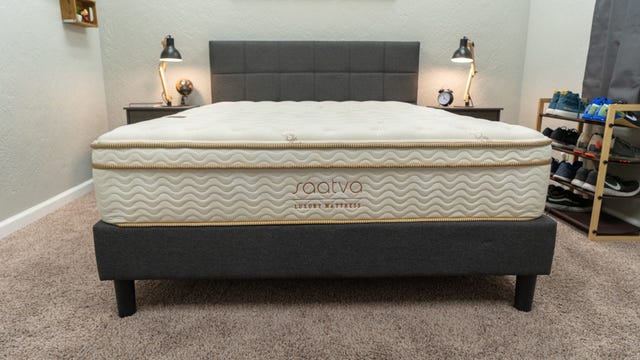
Back sleepers need both comfort and support. The Saatva Classic mattress offers both, with extra durability added in. It feels like a traditional innerspring mattress, though it has a couple of important upgrades. The airy pillow top gives it a neutral and responsive feel with plenty of pressure relief.
The classic Saatva is unique for its back-to-back coil layers, which give you optimal support through the night. Most hybrid beds only have one coil layer. When shopping Saatva, you choose between three firmness options: plush soft, luxury firm and firm. Back sleepers will want to opt for either the luxury firm model (around a 7 out of 10 firmness) or the firm (9 out of 10.)
It isn’t the cheapest bed out there, but the high-quality materials, extra support and exceptional comfort make this luxury bed worth the money.
Learn more in our Saatva Classic Mattress Review.
Pros:
Dual-layer innerspring
Multiple firmness options
Good for heavy body types who need more support
Two height options: 11.5 inches or 14.5 inches. According to Saatva’s website, the support and comfort should be the same, it just depends how high you want your bed to be.
Cons:
Potentially too firm for petite body types
Saatva Classic
* Pricing based on Queen model
Purple Restore Mattress
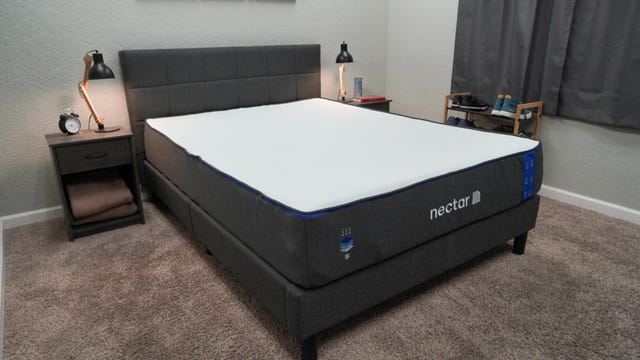
If you’re a back sleeper and you love the feel of memory foam, look no further than the Nectar mattress. It’s an affordable memory foam mattress that’s firm enough to give back sleepers all the support they need. We rate the Nectar mattress around 7 out of 10 or medium-firm. It provides a lot of pressure relief thanks to the memory foam construction, but it’s still firm enough to support your spine.
You get the classic, dense memory foam feel with the Nectar mattress. As you slowly sink into the bed, it cradles around your curves until you almost feel like you’re in a cocoon. Switching positions can make it a little tricky because of how slow-moving the memory foam is, but if you’re a strict back sleeper, that shouldn’t bother you.
Learn more in our Nectar Mattress Review.
Pros:
Affordable
Great for memory fan lovers
The medium-firm profile makes it good for back sleepers
Cons:
Slow-moving memory foam isn’t for everyone
Switching positions takes more effort
Nectar Memory Foam
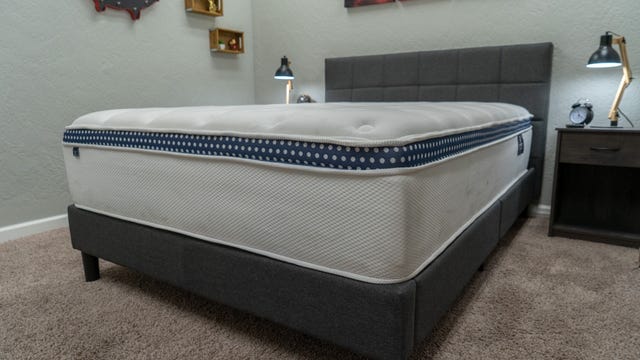
If you’re like me and love the feeling of a pillow top, you’ll like the WinkBed mattress. I can’t say enough good things about its fluffy pillow top. The combination of pocketed coils, foam layers and pillow top finish make it a thick and durable mattress.
The WinkBed mattress is available in three firmnesses: soft (medium-soft or 3), luxury firm (medium or 5) and firm (medium-firm or 7). There’s also a Plus option for heavier sleepers that falls at about an 8 or 9 out of 10. Back sleepers will want to opt for at least the firm option to make sure they have enough support.
Despite having a hotel luxury appeal, the WinkBed mattress is surprisingly affordable. It’s not what I would consider a budget pick, but for the quality you get, WinkBed is a great deal. Learn more in our WinkBed mattress review.
Pros:
Accommodates all body types
Super comfortable pillow top
High-quality materials
Responsive mattress with excellent edge support
Cons:
A little pricier than other options
The WinkBed
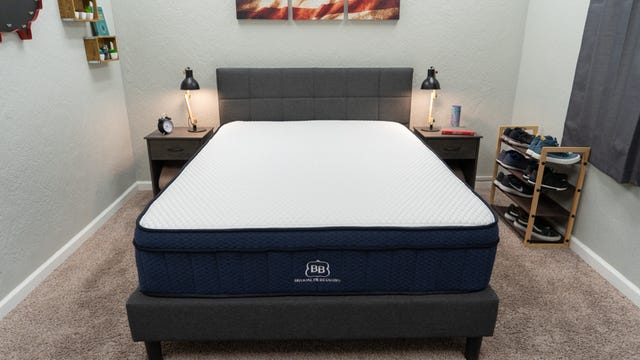
Getting too hot at night can significantly affect your sleep quality. Several mattresses out there have some sort of cooling technology incorporated. Still, no other brand does it quite like the Brooklyn Bedding Aurora Luxe mattress. It’s one of the coolest mattresses we’ve tested, thanks to the CooperFlex foam and Titan Cool cover.
With a mix of sturdy, pocketed coils and squishy foam, this bed has a neutral foam feel that most people will like. It’s not going to give you that stuck-in-the-mud feeling like the Tempur-Pedic. The Brooklyn Bedding Aurora Luxe mattress has three firmness levels: soft, medium and firm.
Back sleepers will want to stick with the firm option, which we found to be about a 7 out of 10. It’s not the firmest option out there, but it will be supportive enough to ensure you don’t sink into the foam layers too much but offer enough pressure relief to sleep comfortably.
Learn more in our Brooklyn Bedding Aurora Luxe mattress review.
Pros:
It’s a physically cool mattress
Firm profile is recommended for back sleepers
Neutral foam feel appeals to most people
Cons:
Soft and medium firmness profiles will not provide enough support for back sleepers
Expensive
Brooklyn Bedding Aurora Luxe
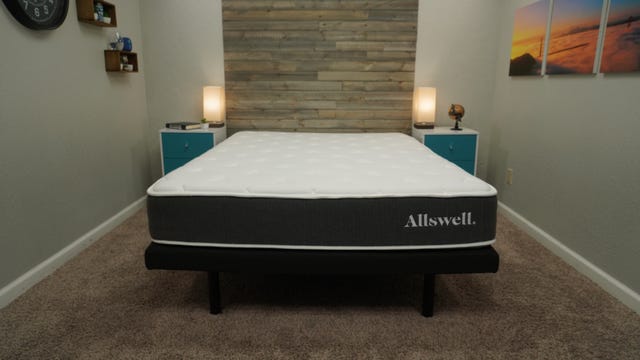
The Allswell 10″ Hybrid Mattress in a Box, Twin
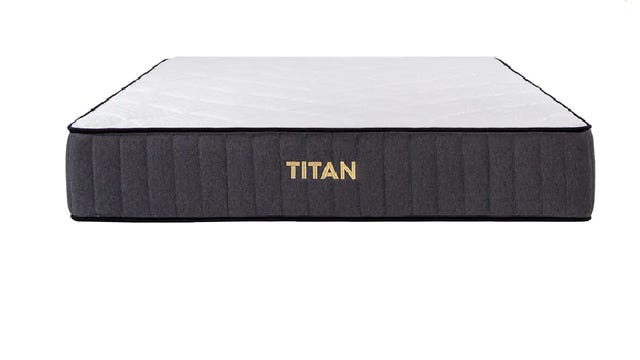
Titan Plus
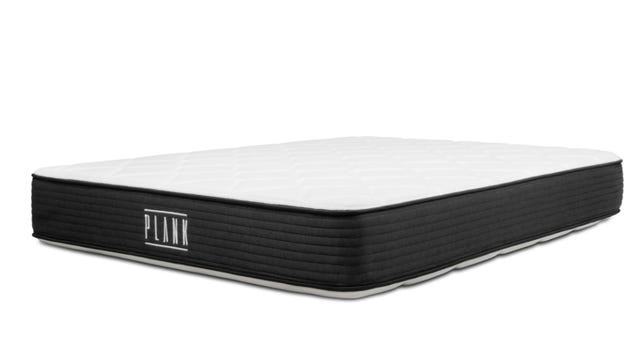
Plank Firm Natural Mattress
Comparing the best mattresses for back sleepers
Mattress
Mattress Type
Price (Queen MSRP)
Sleep trial
Warranty
Saatva Classic
Hybrid
$1,995
365 nights
Lifetime warranty
Purple Restore
Hybrid
$2,399
100 nights
10-year warranty
Nectar
Memory foam
$1,099
365 nights
Forever warranty
Winkbed
Hybrid
$1,499
120 nights
Lifetime warranty
Brooklyn Bedding Aurora Luxe
Hybrid
$2,265
120 nights
10-year limited warranty
Allswell Brick
Hybrid
$427
100 nights
10-year warranty
Titan Plus
Hybrid
$1,249
120 nights
10-year warranty
Plank
Hybrid
$1,332
120 nights
10-year warranty
Other mattresses we’ve tested
You’ve just read our picks for the best mattresses for back sleepers. There were a few more that we considered that are worth mentioning. Though they didn’t make the cut for this list, we still think they’re really great mattresses.
DreamCloud Premier: This is a 14-inch hybrid mattress that has layers of comfy foam and a plush pillow top. The DreamCloud Premier has a responsive memory foam feel. We found it to be between a medium to a medium-firm on our scale, making it good for back sleepers. The DreamCloud Premier is also available in an all-foam construction.
Leesa Oasis Chill: The Oasis Chill is a new hybrid mattress from Leesa that we really liked while we tested it. We’d recommend the Cushion Firm model for back sleepers; it’s about a medium-firm on our scale. It has a responsive pillow top feel and a zoned support coil system that can help people with back pain. We would consider it an actively cooling mattress, though it’s not the coolest out there.
DreamFoam Chill: If you’re looking for a budget foam mattress good for back sleeping, check out the DreamFoam Chill. After discounts, you can get the DreamFoam Chill bed for under $500. It’s available in five different height profiles, with the 10-inch being the most popular. That 10-inch model is a medium-firm to firm, about an 8 on our scale. We compare how it feels to the Plank mattress.
Loom & Leaf: Saatva’s Loom & Leaf mattress is an all-foam mattress with two different memory foams for comfort layers and a plush pillow top. It’s available in two firmness options: relaxed firm and firm. Either option is going to serve back sleepers well.
How we tested the best mattress for back sleepers
Our team of sleep and mattress experts has tested over 200 mattresses collectively. During that time, we’ve established testing methods that assess each mattress for each key performance factor.
We test all mattresses the same, though when selecting which beds make our best lists, we consider each option based on the topic. In this case, it’s back sleepers. There are several perfectly good mattresses that we rate highly, but won’t won’t make this back sleepers list because they are better suited for someone else.
Firmness: We’ve rated every mattress we’ve ever tested for firmness, comparing them to each other. This has allowed us to establish a firmness scale ranging from soft to extra firm. Mattress for back sleepers will fall on the firmer side of the scale — medium to medium-firm and up.
Feel: When testing and rating how a mattress feels, we touch and feel the bed while watching how the materials respond. Is it light and bouncy? Or does it take a while to snap back like traditional memory foam?
Durability: We hypothesize a bed’s durability based on its construction. Beds with steel coil bases generally hold up better in the long run, though plenty of foam mattresses have a good lifespan.
Best body type: Using the firmness and construction of each bed, we determine who is best suited for a bed. For example, heavier body types need the extra support of coils. Petite body types will find that mattresses feel firmer because they put less pressure on them.
Best sleeping position: We also consider sleeping position when testing mattresses. We lie on each mattress in every position — back, stomach, side and combination — taking extra care to note how it feels on our backs and pressure points.
Motion isolation: We use a few tests for motion isolation. First, two people lie on the bed and bounce around to see if the other can feel their movements. This is essential if you have a partner who moves around often at night. We also place a glass of water on the edge of the mattress and roll and bounce around to see if it tips over.
Edge support: Think of edge support as the strength of the bed’s perimeter. We sit and lie on the edge of each bed and rate how well it supports our weight. If we feel we might roll off it, the bed doesn’t have good edge support.
Check out how we test mattresses for even more of the nitty-gritty of our process.
What to consider when shopping for a bed as a back sleeper
Back sleeping is the second most common sleeper style, providing several advantages including neutral spinal alignment and preventing back and neck pain. On top of the various personal preferences that will help determine which bed you should choose, how you sleep also factors in.
Let’s discuss what factors will help you narrow down your ideal bed when comparing the top options for back sleepers.
Firmness
Back sleepers need a firmer mattress for quality sleep. If a mattress is too soft, you’ll sink in unevenly, and your spine will be out of alignment. This can contribute to back pain.
Remember that firmness is a scale, and just because you’re a back sleeper doesn’t mean you have to opt for the firmest bed out there. You don’t have to sacrifice comfort to get the support you need. We recommend plenty of supportive beds for back sleepers that fall at around a medium to medium-firm level.
Body type
Your body type will influence two main things when shopping for a mattress: firmness and construction. Depending on how much you weigh, you will put more or less pressure on a mattress, determining how you will experience the mattress. Petite body types will find that beds will feel firmer because they don’t put much pressure on them. Alternatively, heavier body types will find that beds feel softer, so they may want to opt for firmer options.
Your body type will also influence which construction you should get. Generally, heavier body types should buy hybrid mattresses with steel coils for optimal support and comfort. They’re a safer choice in the long run.
Budget
Beds will cost you a decent chunk of change; there’s no way around it. Identifying your budget will help you filter out many options, making your search more manageable.
While the average mattress costs $800 to $1,200, several good options are outside this range. You can find budget mattresses as low as $300 and luxury options well over $2000.
Back sleepers tend to find that firmer mattresses are more comfortable for them. We recommend that back sleepers choose at least a medium to medium-firm mattress, which translates to a 6 out of 10. For many back sleepers, even firmer beds are better to ensure they get enough support through the night.
When you sleep on a mattress that’s too soft, it allows your middle section to sink too far in. This puts your spine out of neutral alignment, contributing to back pain.
Soft mattresses are great for side sleepers because they relieve pressure around the shoulders, hips and knees. They just aren’t the best choice for back sleepers.